

When and where... in to the future... or back to the future?

Although loosely affiliated with early-twentieth century Futurism, retrofuturism draws from a wider range of sources. To be sure, retrofuturist art and literature often draws from the factories, buildings, cities, and transportation systems of the machine age. But it might be said that 20th century futuristic vision found its ultimate expression in the development of Googie architecture or Populuxe design. As applied to fiction, this brand of retrofuturistic visual style began to take shape in William Gibson's short story "The Gernsback Continuum". Here and elsewhere it is referred to as Raygun Gothic, a catchall term for a visual style that incorporates various aspects of the Googie, Streamline Moderne, and Art Deco architectural styles when applied to retrofuturistic science fiction environments.
Sponsorizzato
Categorie
Leggi tutto
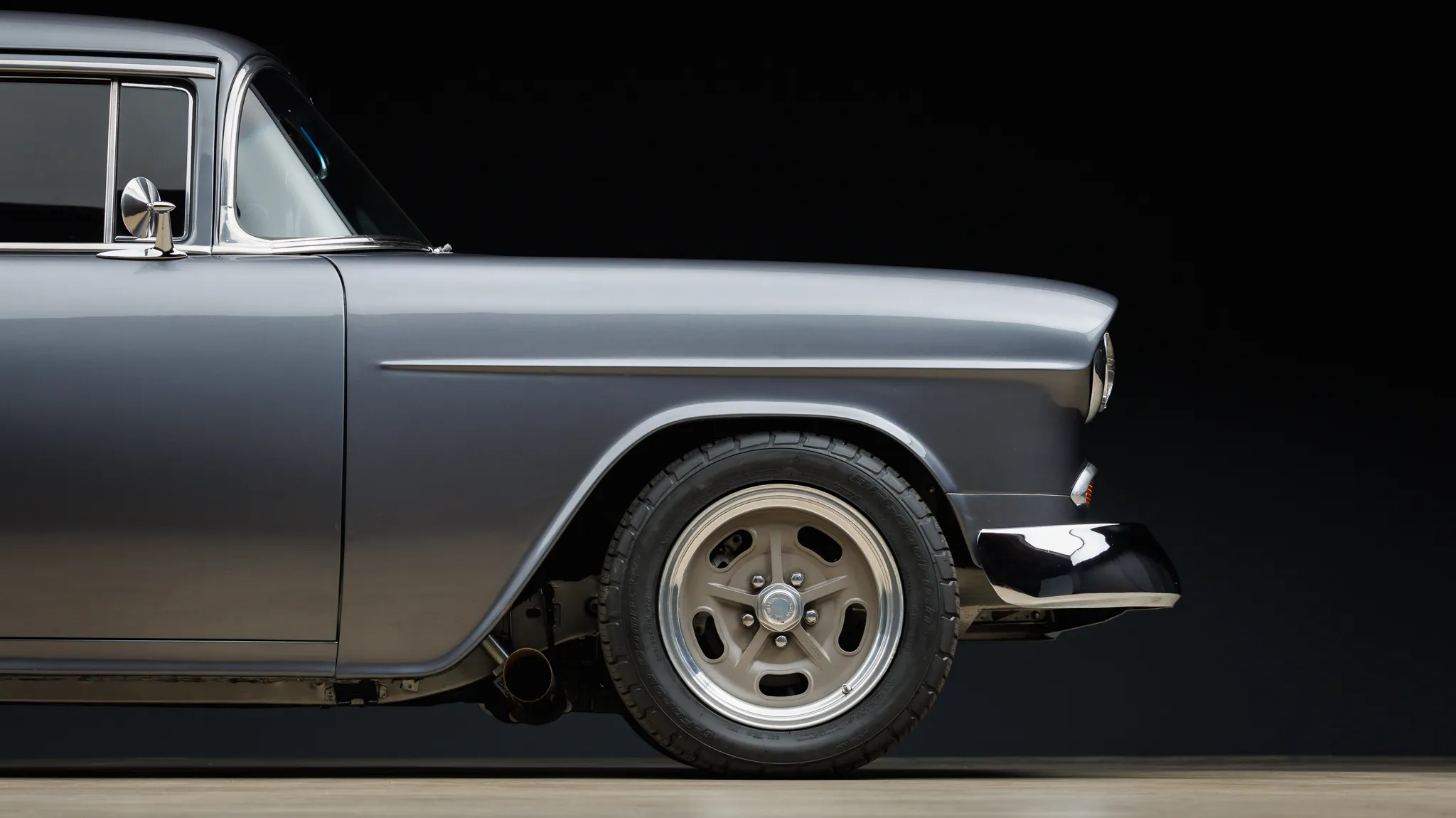
Short after it was introduced, the 1955 Chevrolet became a popular car to customize. Popular tricks was to modify the grille, hradlights, taillights, and chromework. One of the most popular tricks on the Chevy was to change the side trim, installing a piece that ran parallel to original dip in the body just aft of the door.

smile smile smile smile smile smile smile smile smile smile smile smile smile smile smile smile smile smile smile smile smile smile smile smile smile smile smile smile smile smile smile smile smile smile smile smile smile smile smile smile smile smile smile smile smile smile smile smile smile smile smile smile smile smile smile smile smile smile smile smile smile smile smile smile smile smile...

Although loosely affiliated with early-twentieth century Futurism, retrofuturism draws from a wider range of sources. To be sure, retrofuturist art and literature often draws from the factories, buildings, cities, and transportation systems of the machine age. But it might be said that 20th century futuristic vision found its ultimate expression in the development of Googie architecture or...
Time to get fit... a healthy body is a strong body... when you are strong you can help not only yourself but those around you that you care about. Get organized and create a foundation you can strand strongly upon.

The 1955 Chevy represents one of the most significant redesigns in American automotive history. Often celebrated as the first of the legendary "Tri-Five" Chevys, the '55 model introduced a sleek "shoe box" design and the revolutionary small-block V8 engine, cementing its status as an icon of the era.